Portsmouth’s Mary-Rose: Symbolic Relic, Monument and Inspiration
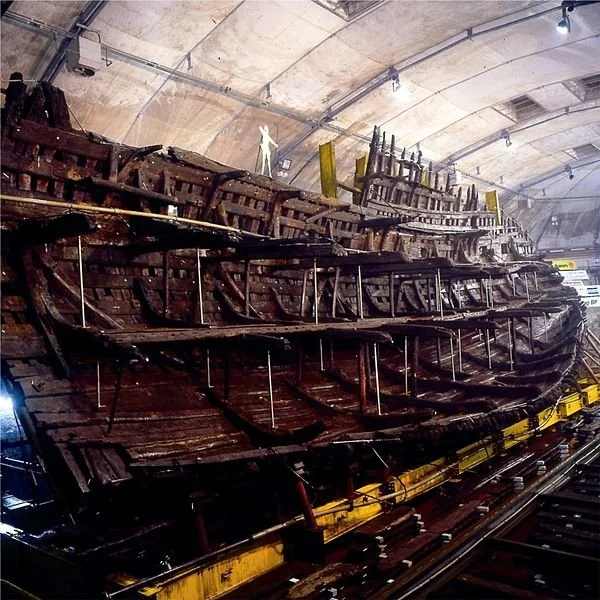
Henry VIII’s iconic warship the Mary-Rose was lost during a battle against the French in the waters off Portsmouth in 1545. Tragically, the ship capsized and sank while close to shore, taking 500 men to their deaths.
The ship and its crew were not destroyed by the enemy. It is thought that the ship was too ornate and top-heavy and that its extravagant, unstable bulk caused it to capsize. The men on deck could not escape because they were trapped by thick rope nets they had erected to stop the French from boarding. The English sailors were dragged into the water and drowned because of this strong rope netting, which is still pristine, still smelling of hemp today in the Portsmouth museum where the wreck is preserved and displayed.
Only the half of the ship that sank into the deep silt off the coastline survived. The timbers that were exposed to the scouring currents vanished long ago.
Seeing the Mary Rose in person is a fascinating and haunting experience. The surviving portion of the ship is huge, its timbers darkened by centuries spent underwater, and supported by scaffolding and conservation equipment. Despite the wreck’s fragility, it is easy to imagine its former magnificence and the panic of the sailors trapped on deck.
This rich and tragic scene and atmosphere stayed with me for a long time and helped inspire my psychological suspense novel The Pet-Sit, a story in which the past is not just background, it’s something that remains and influences, disturbs and must be faced down.